Barbosa |
|||
Bastian |
|||
Blum |
|||
Brott |
|||
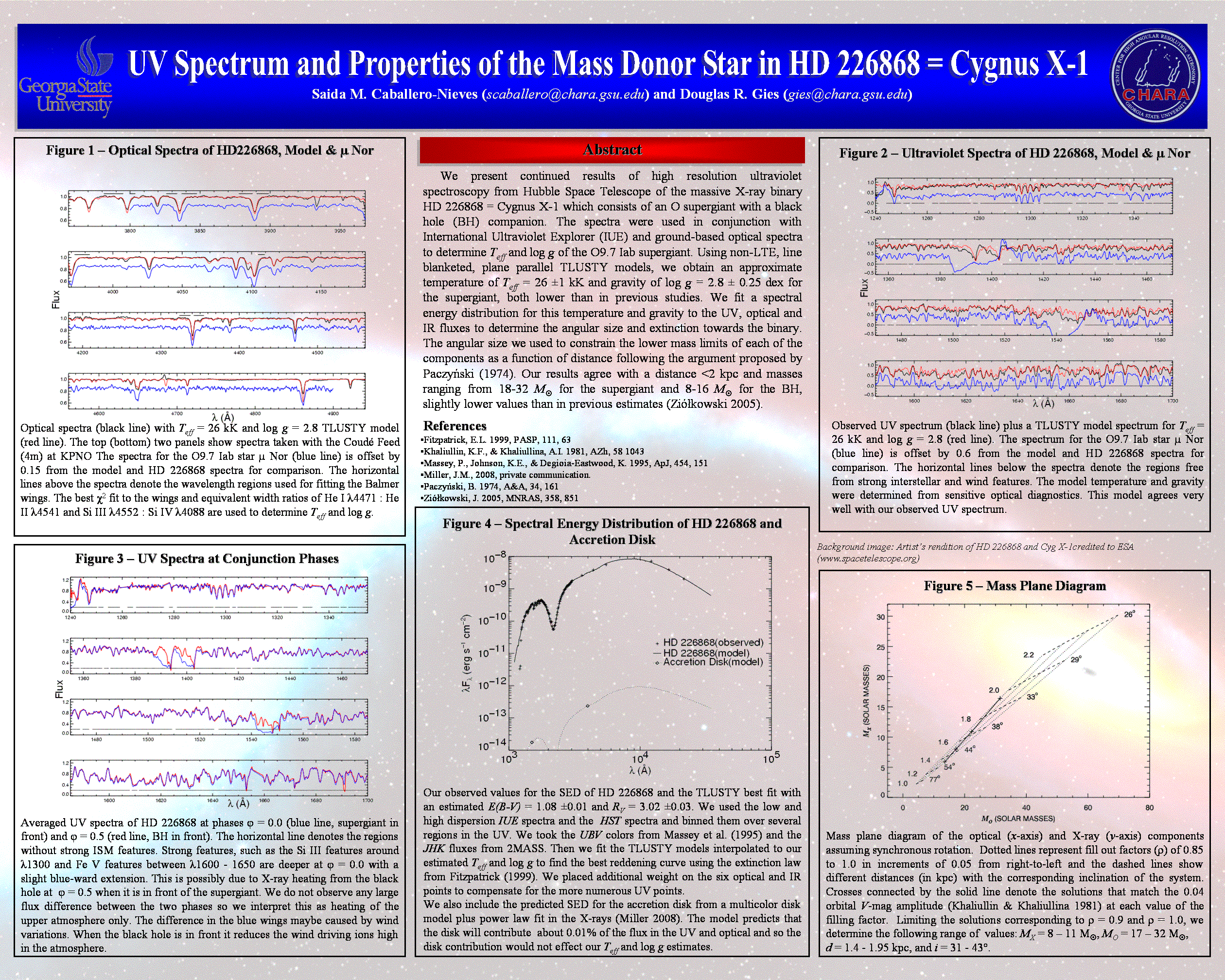
Caballero |
|||
Chen |
|||
Chita |
|||
Chu |
|||
Churchwell |
|||
Corcoran |
|||
Crowther |
|||
Damineli et al |
|||
Damineli |
|||
Fullerton |
|||
Gagne |
|||
Gallagher |
|||
Garcia |
|||
Garmany |
|||
Georgiev |
|||
Hamann |
|||
Hillier |
|||
Howarth |
|||
Indebetouw |
|||
Kobulnicky |
|||
Koenigsberger |
|||
Lang |
|||
Leitherer |
|||
Lennon |
|||
Levesque |
|||
Linder |
|||
Maeder |
|||
Mahy |
|||
Massa |
|||
Massey |
|||
McSwain |
|||
Moffat |
|||
Moises |
|||
Morrell |
|||
Morris |
|||
Naze |
|||
Nieva |
|||
Olsen |
|||
Oskinova |
|||
Owocki |
|||
Penny |
|||
Przybilla |
|||
Skinner |
|||
Smith |
|||
Soderberg |
|||
Teodoro |
|||
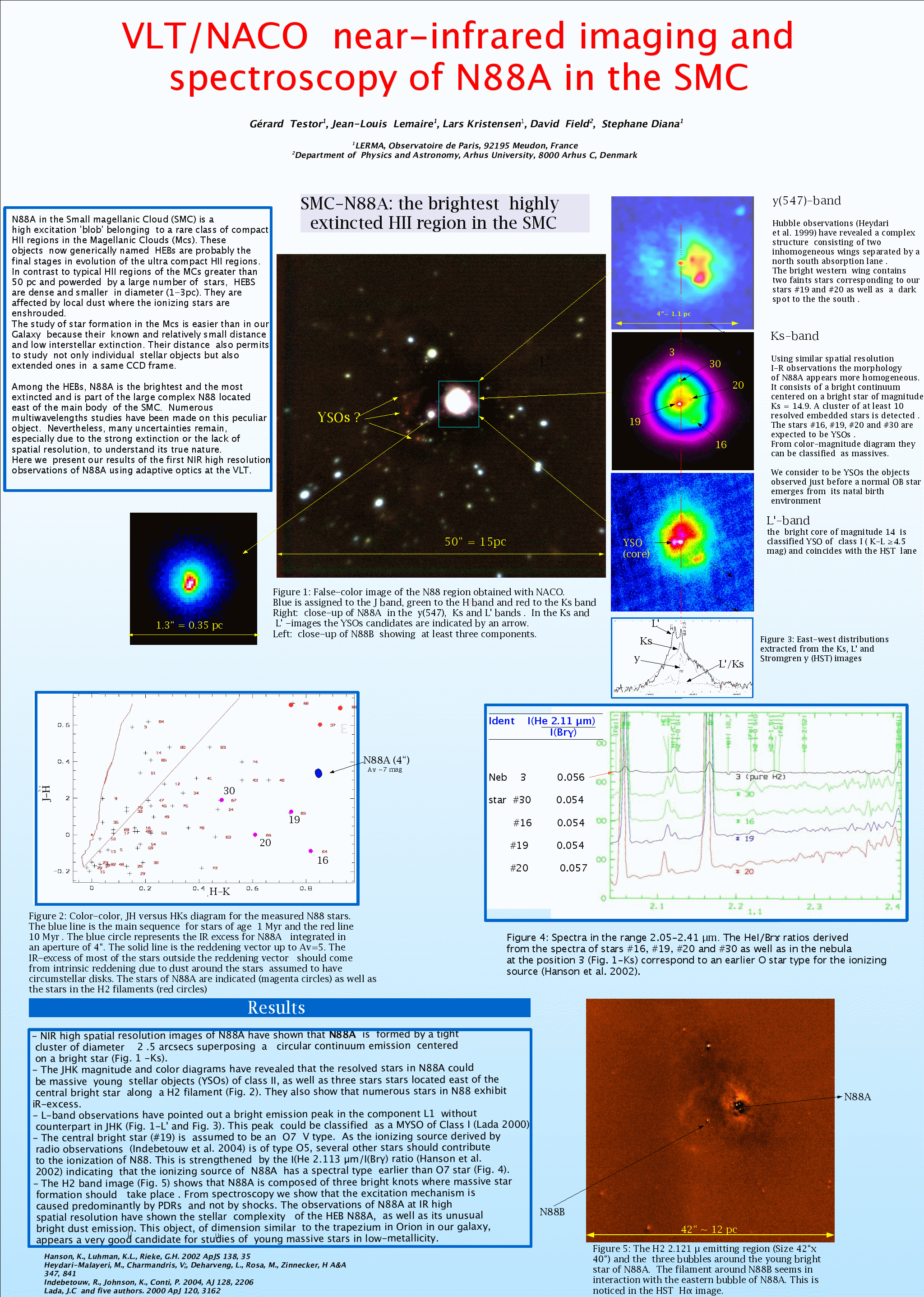
Testor |
|||
Townsley |
|||
Vacca |
|||
Vink |
|||
Wachter |
|||
Walborn |
|||
Wallerstein |
|||
Whelan |
|||
Williams |
|||
Willis |
|||
Wing |
|||
Wolff |
|||
van den Heuvel |
Massive binaries
Nidia Morrell
Las Campanas Observatory
Massive stars are unusual objects: they form in small numbers, in regions rather unaccesible to detailed optical observations, and their lives are short. As a consequence, fundamental parameters for the most massive stars are still uncertain. Among those, the mass is the one that mainly determines a star's characteristics and evolution. The study of double lined eclipsing binaries is the only method allowing empirical evaluation of stellar masses. The most massive stars so far weighted in this way are H-rich WN stars, from the class recently designed as WNH by Smith and Conti (2008) and the masses derived for them are close, though still somewhat below the predicted mass cuttoff near 150Mo, leaving still room for the question about how massive a star can be. Also, the masses predicted by evolutionary models are often in disagreement with those derived by fitting the spectra with model stellar atmospheres, a problem known as the 'mass discrepancy'. Unresolved multiplicity is one of the largest sources of uncertainties in the determination of massive stars parameters, causing multiple systems to appear as single objects of extremely large evolutionary masses. In this review I will summarize recent progress in the study of binaries with massive components as well as some of the on-going projects aimed to establish the multiplicity status of early-O and WNH stars, to investigate the 'mass discrepancy' and to empirically determine the upper stellar mass limit.