Barbosa |
|||
Bastian |
|||
Blum |
|||
Brott |
|||
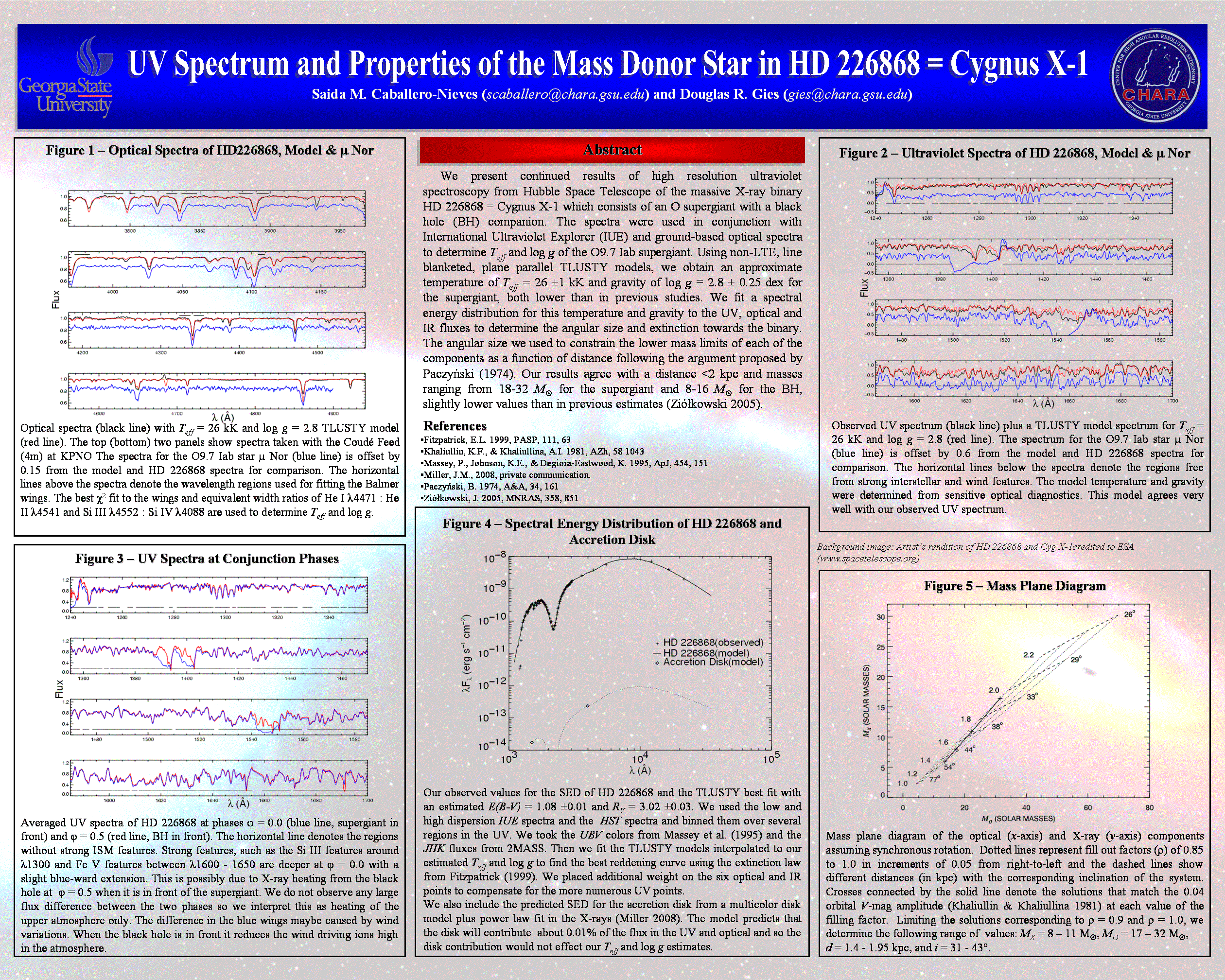
Caballero |
|||
Chen |
|||
Chita |
|||
Chu |
|||
Churchwell |
|||
Corcoran |
|||
Crowther |
|||
Damineli et al |
|||
Damineli |
|||
Fullerton |
|||
Gagne |
|||
Gallagher |
|||
Garcia |
|||
Garmany |
|||
Georgiev |
|||
Hamann |
|||
Hillier |
|||
Howarth |
|||
Indebetouw |
|||
Kobulnicky |
|||
Koenigsberger |
|||
Lang |
|||
Leitherer |
|||
Lennon |
|||
Levesque |
|||
Linder |
|||
Maeder |
|||
Mahy |
|||
Massa |
|||
Massey |
|||
McSwain |
|||
Moffat |
|||
Moises |
|||
Morrell |
|||
Morris |
|||
Naze |
|||
Nieva |
|||
Olsen |
|||
Oskinova |
|||
Owocki |
|||
Penny |
|||
Przybilla |
|||
Skinner |
|||
Smith |
|||
Soderberg |
|||
Teodoro |
|||
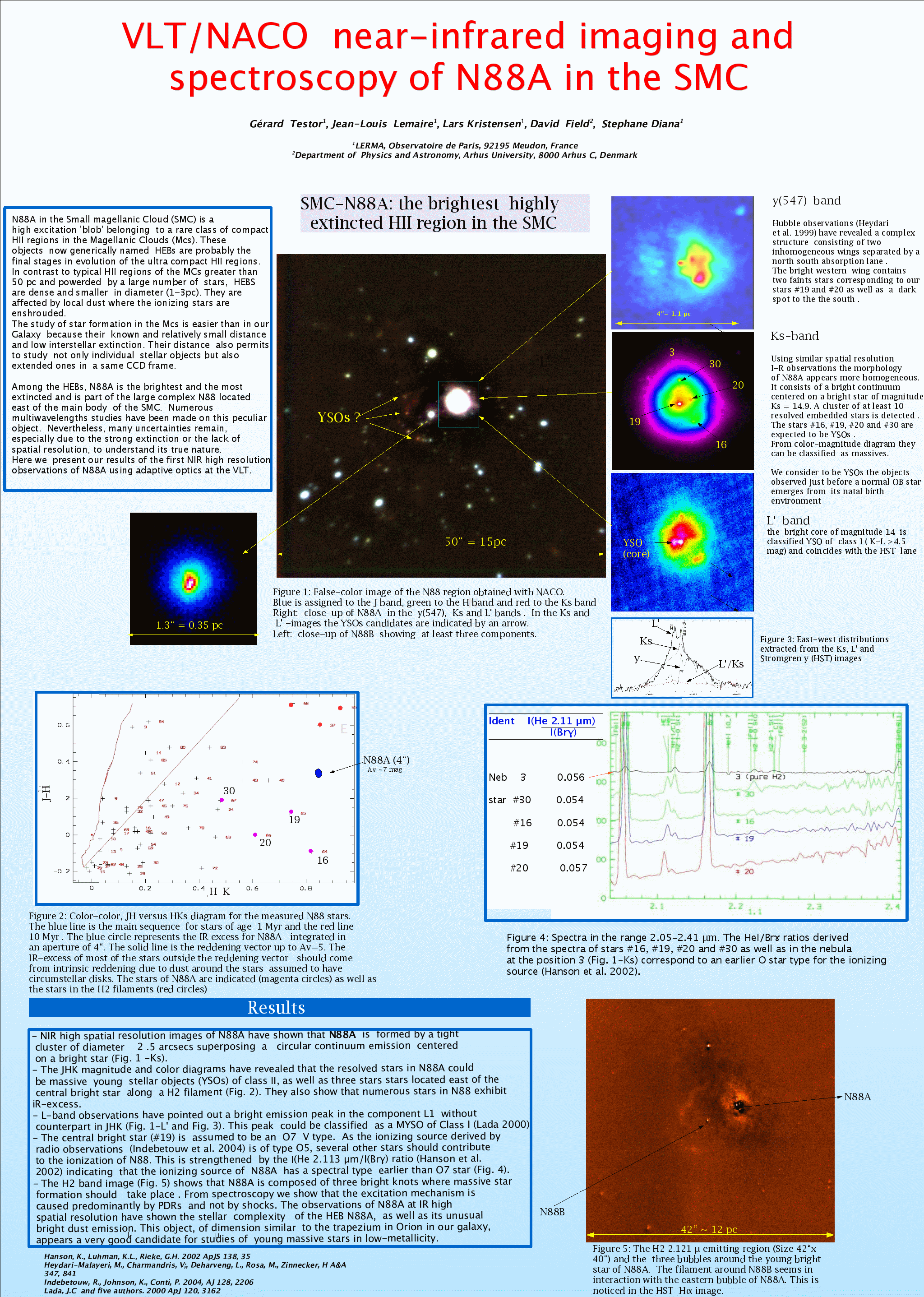
Testor |
|||
Townsley |
|||
Vacca |
|||
Vink |
|||
Wachter |
|||
Walborn |
|||
Wallerstein |
|||
Whelan |
|||
Williams |
|||
Willis |
|||
Wing |
|||
Wolff |
|||
van den Heuvel |
The Physical Properties of Red Supergiants
Emily M. Levesque
Institute for Astronomy, University of Hawaii
Red supergiants (RSGs) are a He-burning phase in the evolution of moderately massive stars (10-25 solar masses). For many years, the assumed physical properties of these stars placed them at odds with the predictions of evolutionary theory. We have recently used the newest generation of the MARCS stellar atmosphere models to determine new effective temperatures and luminosities for red supergiants in galaxies with a wide range of metallicities, including M31, the Milky Way, and the Magellanic Clouds. We find that these new parameters greatly improve the agreement between the RSGs and the evolutionary tracks, although there are still notable difficulties with modeling the physical properties of the RSG population at lower metallicities. In addition, we have also discovered a sample of four RSGs in the Magellanic Clouds that show considerable variations in their V magnitudes and effective temperatures. In all four cases, when these stars are at their warmest they are also brightest, dustier, and more luminous, behavior that can be connected with sporadic dust production from these stars in their coolest states. Each of these stars, at their coldest, also have spectral types that are considerably later than the average RSG subtype for their host galaxies. We believe that these stars are undergoing an unstable evolutionary phase not previously associated with RSGs.