Barbosa |
|||
Bastian |
|||
Blum |
|||
Brott |
|||
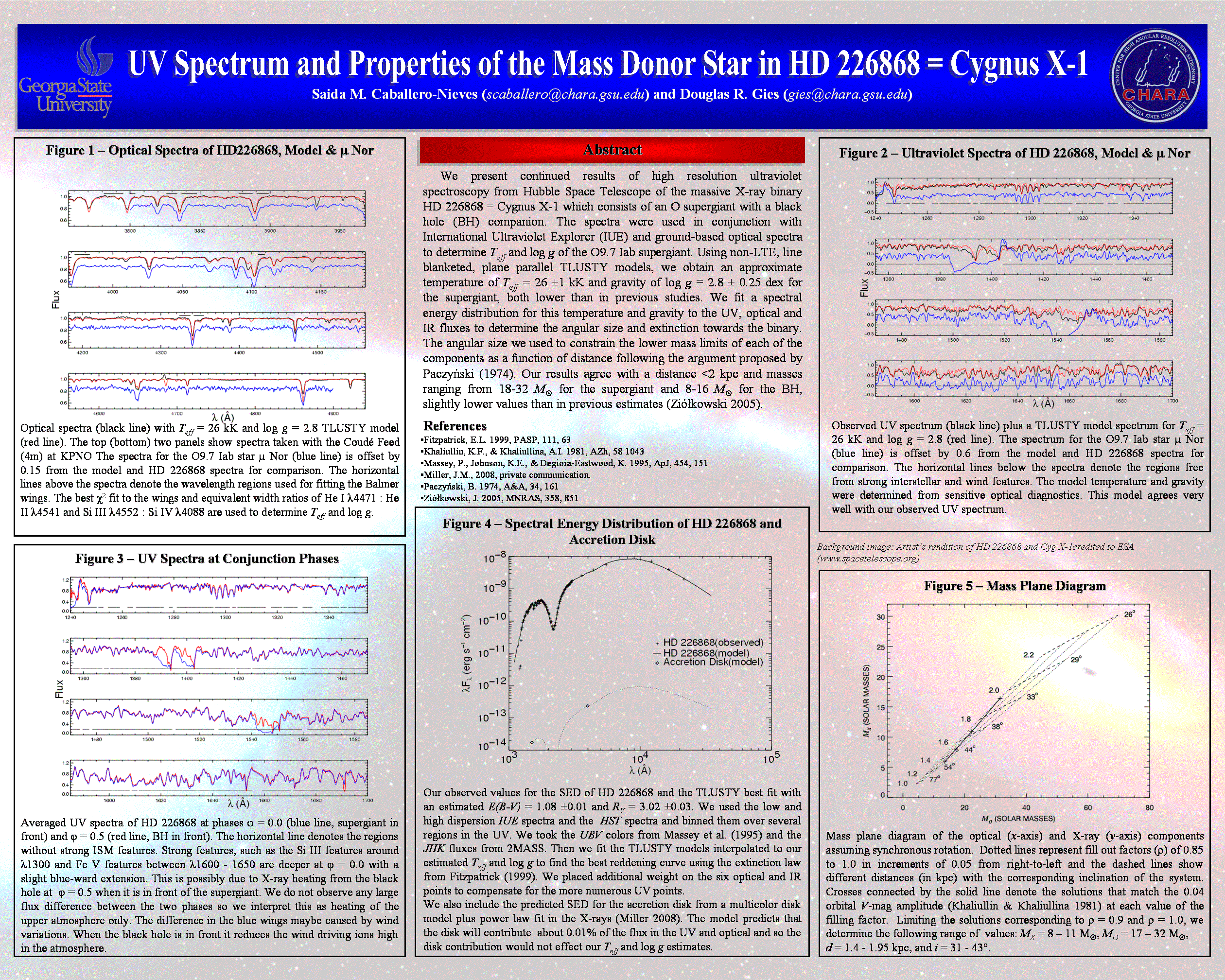
Caballero |
|||
Chen |
|||
Chita |
|||
Chu |
|||
Churchwell |
|||
Corcoran |
|||
Crowther |
|||
Damineli et al |
|||
Damineli |
|||
Fullerton |
|||
Gagne |
|||
Gallagher |
|||
Garcia |
|||
Garmany |
|||
Georgiev |
|||
Hamann |
|||
Hillier |
|||
Howarth |
|||
Indebetouw |
|||
Kobulnicky |
|||
Koenigsberger |
|||
Lang |
|||
Leitherer |
|||
Lennon |
|||
Levesque |
|||
Linder |
|||
Maeder |
|||
Mahy |
|||
Massa |
|||
Massey |
|||
McSwain |
|||
Moffat |
|||
Moises |
|||
Morrell |
|||
Morris |
|||
Naze |
|||
Nieva |
|||
Olsen |
|||
Oskinova |
|||
Owocki |
|||
Penny |
|||
Przybilla |
|||
Skinner |
|||
Smith |
|||
Soderberg |
|||
Teodoro |
|||
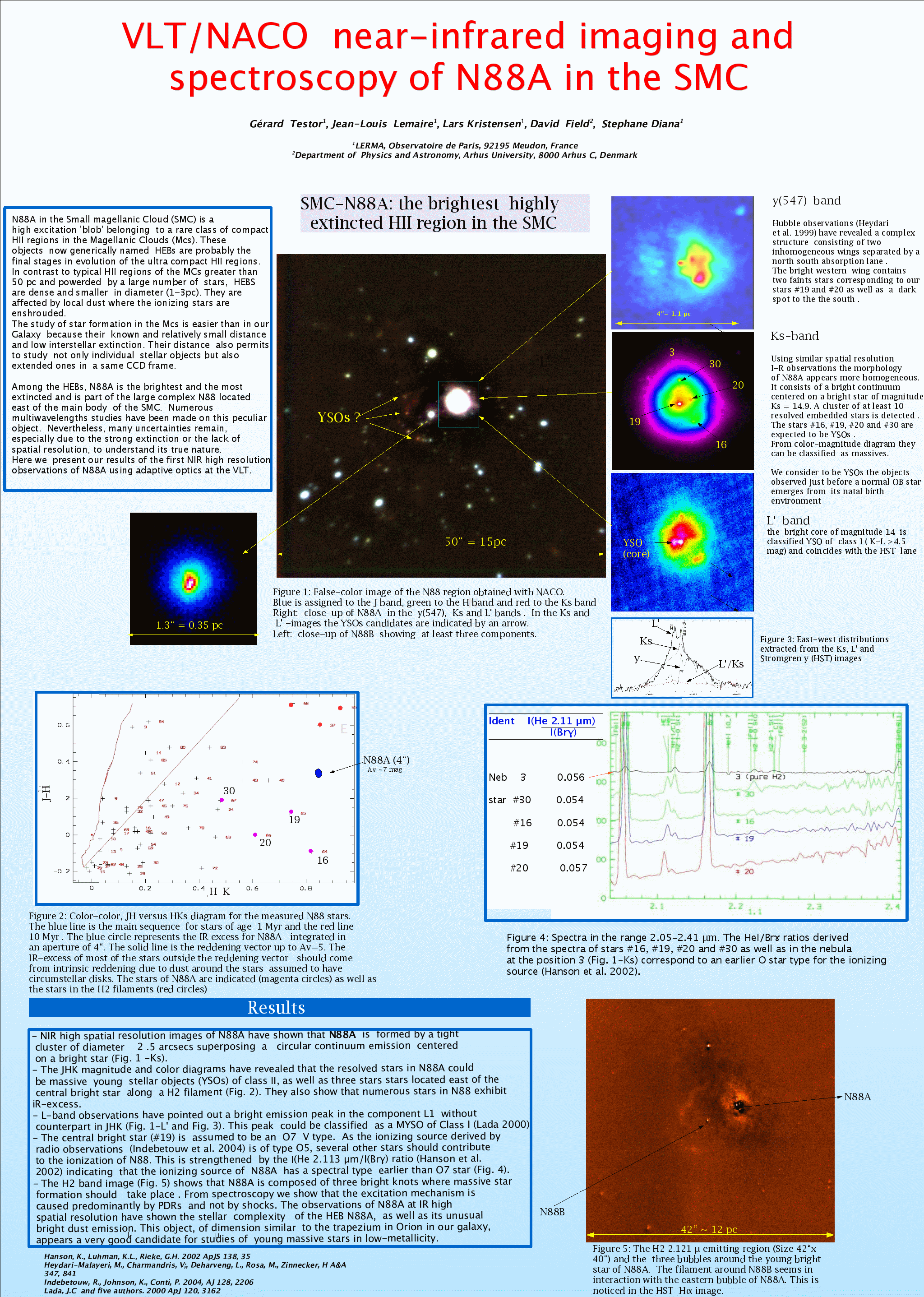
Testor |
|||
Townsley |
|||
Vacca |
|||
Vink |
|||
Wachter |
|||
Walborn |
|||
Wallerstein |
|||
Whelan |
|||
Williams |
|||
Willis |
|||
Wing |
|||
Wolff |
|||
van den Heuvel |
Upcoming Periastron Passages of WR 140 and Eta Car
Michael F. Corcoran, CRESST/USRA/GSFC
Ted Gull, GSFC
Kenji Hamaguchi, CRESST/UMBC/GSFC
John Hillier, University of Pittsburgh
Anthony Moffat, University of Montreal
Atsuo Okazaki, Hokkai-Gakuen University
Stan Owocki, Bartol
Ross Parkin, University of Leeds
Julian Pittard, University of Leeds
Andy Pollock, ESA
Chris Russell, Bartol
The International Year of Astronomy begins with the periastron passes of the two most massive, high eccentricity, long period colliding wind binaries, WR 140 (= HD193793) and Eta Carinae in January 2009. These colliding wind binaries are key objects for probing phenomena associated with mass loss from evolved stars in the upper HR diagram. Despite large differences in their periods (7.9 years for WR 140 and 5.5 years for Eta Car) both stars will undergo periastron passage within weeks of each other, offering a rare opportunity for astronomers to almost simultaneously compare observational effects on the stellar winds as the companion stars skim through the inner winds of the primary stars. Observing campaigns from infrared through X-ray energies have been organized to probe mechanisms of dust formation, changes in free-free emission and the state of the hot shocked gas in the wind-wind collision zone. We discuss these observing campaigns, efforts at 3-D modeling of the systems, and report the status of observations already obtained.