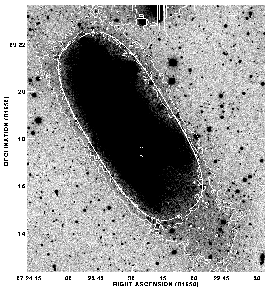
 Figure 3. Deep display of a V-band image of the irregular galaxy NGC 2366.
Contours are of the V-band image
smoothed 14x14 pixels. The inner contour is of a surface brightness level of
25.66 magnitudes/arcsec^2 and highlights the region fit as a bar, and
the smooth ellipse is a bar structure with c=3.0 and a semi-major axis
of 4.3 arcminutes.
The outer contour is at a surface brightness of 26.54 magnitudes/arcsec^2
and highlights the region of low surface brightness that
extends the major axis to the southwest.
Residuals of a saturated star are visible along the top edge
of the image.
(Funded by NSF through grant AST-9802193 to DAH and grant AST-9870112 to BGE.)
Figure 3. Deep display of a V-band image of the irregular galaxy NGC 2366.
Contours are of the V-band image
smoothed 14x14 pixels. The inner contour is of a surface brightness level of
25.66 magnitudes/arcsec^2 and highlights the region fit as a bar, and
the smooth ellipse is a bar structure with c=3.0 and a semi-major axis
of 4.3 arcminutes.
The outer contour is at a surface brightness of 26.54 magnitudes/arcsec^2
and highlights the region of low surface brightness that
extends the major axis to the southwest.
Residuals of a saturated star are visible along the top edge
of the image.
(Funded by NSF through grant AST-9802193 to DAH and grant AST-9870112 to BGE.)
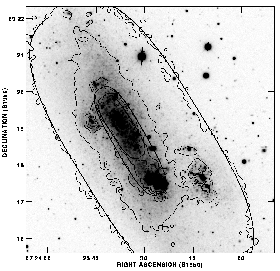 Figure 4. Shallow display of
a V-band image of NGC 2366. Contours are of the V-band image smoothed
14x14 pixels.
The smooth ellipses are the fits to bar structures.
(Funded by NSF through grant AST-9802193 to DAH and grant AST-9870112 to BGE.)
Figure 4. Shallow display of
a V-band image of NGC 2366. Contours are of the V-band image smoothed
14x14 pixels.
The smooth ellipses are the fits to bar structures.
(Funded by NSF through grant AST-9802193 to DAH and grant AST-9870112 to BGE.)
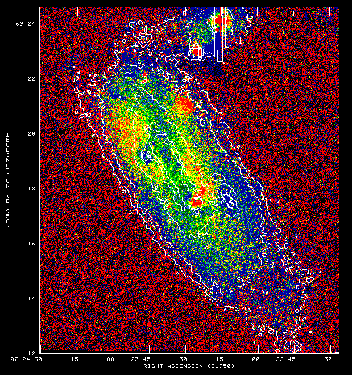 Figure 8.
False-color
display of the optical B/V ratio image.
Note that blue color in the display denotes a higher B/V (bluer) ratio
except for the large red circular region at
red circular region at 7h 23m 30s, 69 deg 21 arcmin that is produced
by bright foreground stars. The
mess along the upper edge to right of middle of the display is also
residual from bright foreground stars.
Contours are from the V-band image smoothed 14x14 pixels and are
26.54, 25.66, 24.04, 23.04, and 22.68 magnitudes/arcsec^2.
(Funded by NSF through grant AST-9802193 to DAH and grant AST-9870112 to BGE.)
Figure 8.
False-color
display of the optical B/V ratio image.
Note that blue color in the display denotes a higher B/V (bluer) ratio
except for the large red circular region at
red circular region at 7h 23m 30s, 69 deg 21 arcmin that is produced
by bright foreground stars. The
mess along the upper edge to right of middle of the display is also
residual from bright foreground stars.
Contours are from the V-band image smoothed 14x14 pixels and are
26.54, 25.66, 24.04, 23.04, and 22.68 magnitudes/arcsec^2.
(Funded by NSF through grant AST-9802193 to DAH and grant AST-9870112 to BGE.)
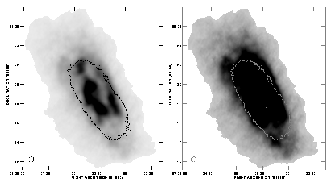 Figure 11.
Integrated HI map of NGC 2366.
Shallow display (left) shows the central HI ring;
deep display (right) shows structure in the outer HI.
The contour is of the V-band image of the galaxy smoothed
14x14 pixels.
The FWHM of the synthesized beam is shown as the ellipse in the lower
left corner of each panel.
(Funded by NSF through grant AST-9802193 to DAH and grant AST-9870112 to BGE.)
Figure 11.
Integrated HI map of NGC 2366.
Shallow display (left) shows the central HI ring;
deep display (right) shows structure in the outer HI.
The contour is of the V-band image of the galaxy smoothed
14x14 pixels.
The FWHM of the synthesized beam is shown as the ellipse in the lower
left corner of each panel.
(Funded by NSF through grant AST-9802193 to DAH and grant AST-9870112 to BGE.)
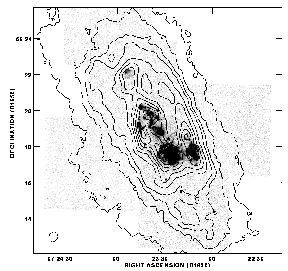 Figure 13.
HI column density contours superposed on our Halpha image.
The HI contours are 0.88, 3.8, 6.8, 9.7, 15.6, 21.5, 27.4, 33.3, 39.2,
and 45.0E20 atoms/cm^2.
The ellipse in the lower left corner is the FWHM of the synthesized
beam 33.6 arcsecX28.9 arcsec.
(Funded by NSF through grant AST-9802193 to DAH and grant AST-9870112 to BGE.)
Figure 13.
HI column density contours superposed on our Halpha image.
The HI contours are 0.88, 3.8, 6.8, 9.7, 15.6, 21.5, 27.4, 33.3, 39.2,
and 45.0E20 atoms/cm^2.
The ellipse in the lower left corner is the FWHM of the synthesized
beam 33.6 arcsecX28.9 arcsec.
(Funded by NSF through grant AST-9802193 to DAH and grant AST-9870112 to BGE.)
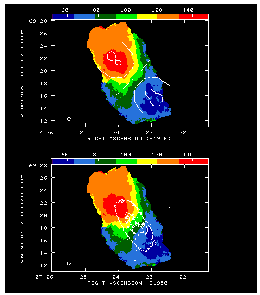 Figure 15.
Color-coded display of the HI velocity
field.
In the upper panel
the contours are of the model best-fit velocity field at 60, 80, 100,
120, and 140 km/s.
In the bottom panel, the outer contour is a V-band contour;
and the inner contour is of the Halpha image.
The units of the color wedge are km/s.
(Funded by NSF through grant AST-9802193 to DAH and grant AST-9870112 to BGE.)
Figure 15.
Color-coded display of the HI velocity
field.
In the upper panel
the contours are of the model best-fit velocity field at 60, 80, 100,
120, and 140 km/s.
In the bottom panel, the outer contour is a V-band contour;
and the inner contour is of the Halpha image.
The units of the color wedge are km/s.
(Funded by NSF through grant AST-9802193 to DAH and grant AST-9870112 to BGE.)
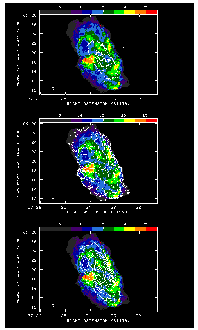 Figure 17.
Color-coded display of the HI velocity dispersion.
The small ellipse in the lower, left corner is the FWHM of the beam.
In the top panel the outer contour is a V-band contour.
The inner contour is of the Halpha image.
In the middle panel the contours are of the velocity field map and
correspond to 60 km/s to 140 km/s in steps of 10 km/s.
In the bottom panel the contours outline the integrated HI map and are
3.5, 7.1, 10.6, 14.1, 21.5, 33.3, and 45.0E20 atoms/cm^2.
The units of the color wedge are km/s.
(Funded by NSF through grant AST-9802193 to DAH and grant AST-9870112 to BGE.)
Figure 17.
Color-coded display of the HI velocity dispersion.
The small ellipse in the lower, left corner is the FWHM of the beam.
In the top panel the outer contour is a V-band contour.
The inner contour is of the Halpha image.
In the middle panel the contours are of the velocity field map and
correspond to 60 km/s to 140 km/s in steps of 10 km/s.
In the bottom panel the contours outline the integrated HI map and are
3.5, 7.1, 10.6, 14.1, 21.5, 33.3, and 45.0E20 atoms/cm^2.
The units of the color wedge are km/s.
(Funded by NSF through grant AST-9802193 to DAH and grant AST-9870112 to BGE.)
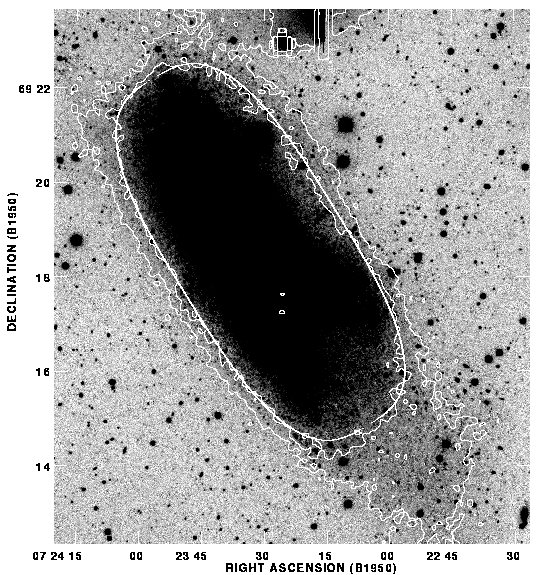
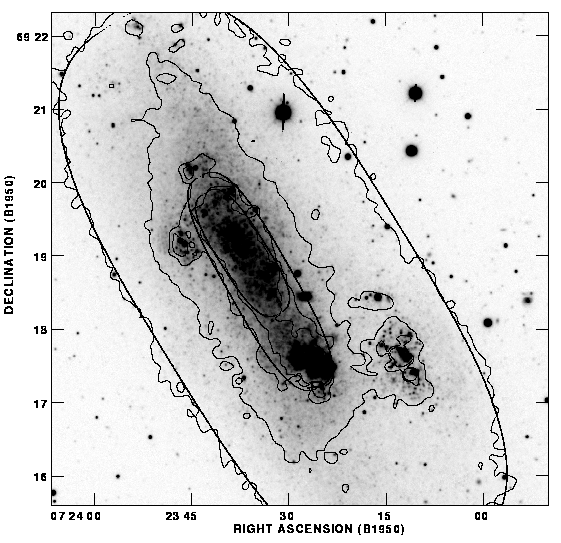 Figure 4. Shallow display of
a V-band image of NGC 2366. Contours are of the V-band image smoothed
14x14 pixels.
The smooth ellipses are the fits to bar structures.
(Funded by NSF through grant AST-9802193 to DAH and grant AST-9870112 to BGE.)
Figure 4. Shallow display of
a V-band image of NGC 2366. Contours are of the V-band image smoothed
14x14 pixels.
The smooth ellipses are the fits to bar structures.
(Funded by NSF through grant AST-9802193 to DAH and grant AST-9870112 to BGE.)
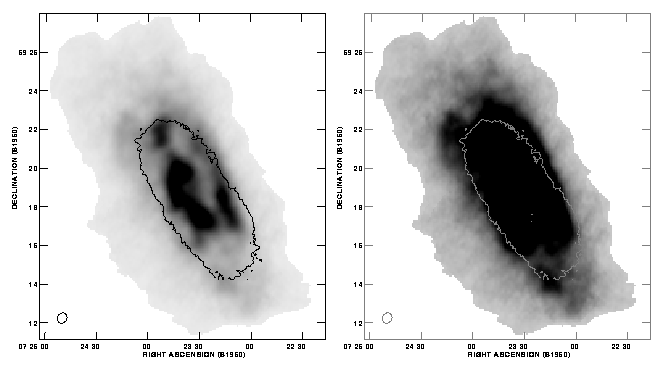 Figure 11.
Integrated HI map of NGC 2366.
Shallow display (left) shows the central HI ring;
deep display (right) shows structure in the outer HI.
The contour is of the V-band image of the galaxy smoothed
14x14 pixels.
The FWHM of the synthesized beam is shown as the ellipse in the lower
left corner of each panel.
(Funded by NSF through grant AST-9802193 to DAH and grant AST-9870112 to BGE.)
Figure 11.
Integrated HI map of NGC 2366.
Shallow display (left) shows the central HI ring;
deep display (right) shows structure in the outer HI.
The contour is of the V-band image of the galaxy smoothed
14x14 pixels.
The FWHM of the synthesized beam is shown as the ellipse in the lower
left corner of each panel.
(Funded by NSF through grant AST-9802193 to DAH and grant AST-9870112 to BGE.)
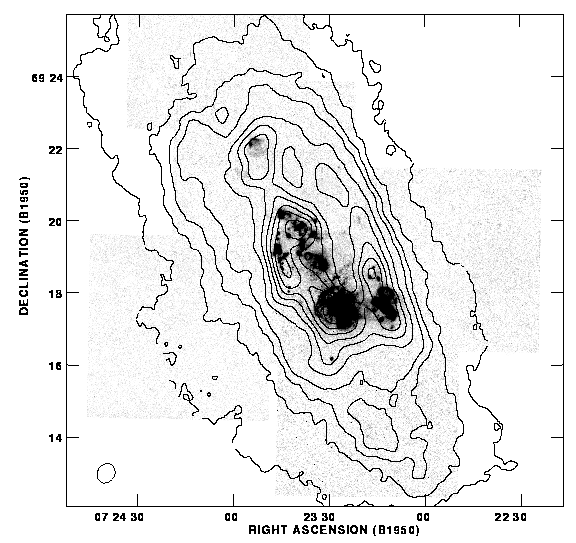 Figure 13.
HI column density contours superposed on our Halpha image.
The HI contours are 0.88, 3.8, 6.8, 9.7, 15.6, 21.5, 27.4, 33.3, 39.2,
and 45.0E20 atoms/cm^2.
The ellipse in the lower left corner is the FWHM of the synthesized
beam 33.6 arcsecX28.9 arcsec.
(Funded by NSF through grant AST-9802193 to DAH and grant AST-9870112 to BGE.)
Figure 13.
HI column density contours superposed on our Halpha image.
The HI contours are 0.88, 3.8, 6.8, 9.7, 15.6, 21.5, 27.4, 33.3, 39.2,
and 45.0E20 atoms/cm^2.
The ellipse in the lower left corner is the FWHM of the synthesized
beam 33.6 arcsecX28.9 arcsec.
(Funded by NSF through grant AST-9802193 to DAH and grant AST-9870112 to BGE.)
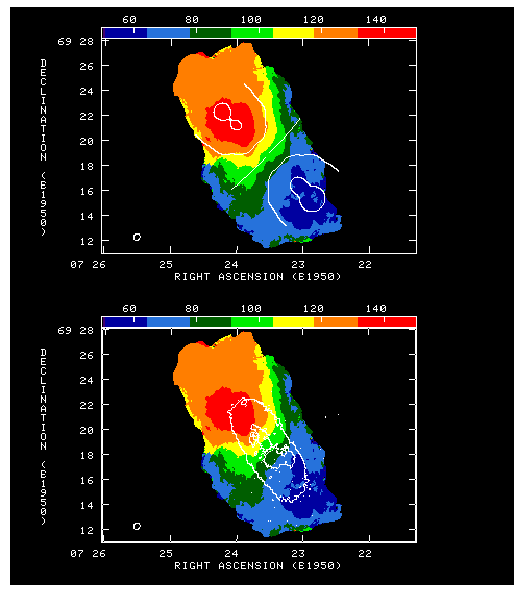 Figure 15.
Color-coded display of the HI velocity
field.
In the upper panel
the contours are of the model best-fit velocity field at 60, 80, 100,
120, and 140 km/s.
In the bottom panel, the outer contour is a V-band contour;
and the inner contour is of the Halpha image.
The units of the color wedge are km/s.
(Funded by NSF through grant AST-9802193 to DAH and grant AST-9870112 to BGE.)
Figure 15.
Color-coded display of the HI velocity
field.
In the upper panel
the contours are of the model best-fit velocity field at 60, 80, 100,
120, and 140 km/s.
In the bottom panel, the outer contour is a V-band contour;
and the inner contour is of the Halpha image.
The units of the color wedge are km/s.
(Funded by NSF through grant AST-9802193 to DAH and grant AST-9870112 to BGE.)
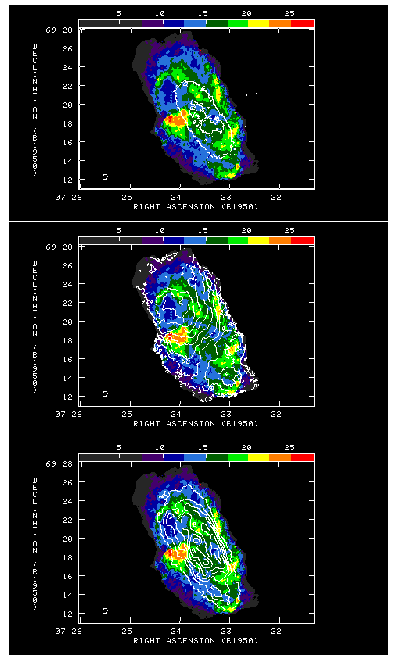 Figure 17.
Color-coded display of the HI velocity dispersion.
The small ellipse in the lower, left corner is the FWHM of the beam.
In the top panel the outer contour is a V-band contour.
The inner contour is of the Halpha image.
In the middle panel the contours are of the velocity field map and
correspond to 60 km/s to 140 km/s in steps of 10 km/s.
In the bottom panel the contours outline the integrated HI map and are
3.5, 7.1, 10.6, 14.1, 21.5, 33.3, and 45.0E20 atoms/cm^2.
The units of the color wedge are km/s.
(Funded by NSF through grant AST-9802193 to DAH and grant AST-9870112 to BGE.)
Figure 17.
Color-coded display of the HI velocity dispersion.
The small ellipse in the lower, left corner is the FWHM of the beam.
In the top panel the outer contour is a V-band contour.
The inner contour is of the Halpha image.
In the middle panel the contours are of the velocity field map and
correspond to 60 km/s to 140 km/s in steps of 10 km/s.
In the bottom panel the contours outline the integrated HI map and are
3.5, 7.1, 10.6, 14.1, 21.5, 33.3, and 45.0E20 atoms/cm^2.
The units of the color wedge are km/s.
(Funded by NSF through grant AST-9802193 to DAH and grant AST-9870112 to BGE.)